Notes from Back-to-School Night (September 2026) for Mrs. Wheeler's 2nd grade class — everything worth remembering from the handouts, condensed. A living page: more notes and photos may be added as the year goes on.
The Classroom
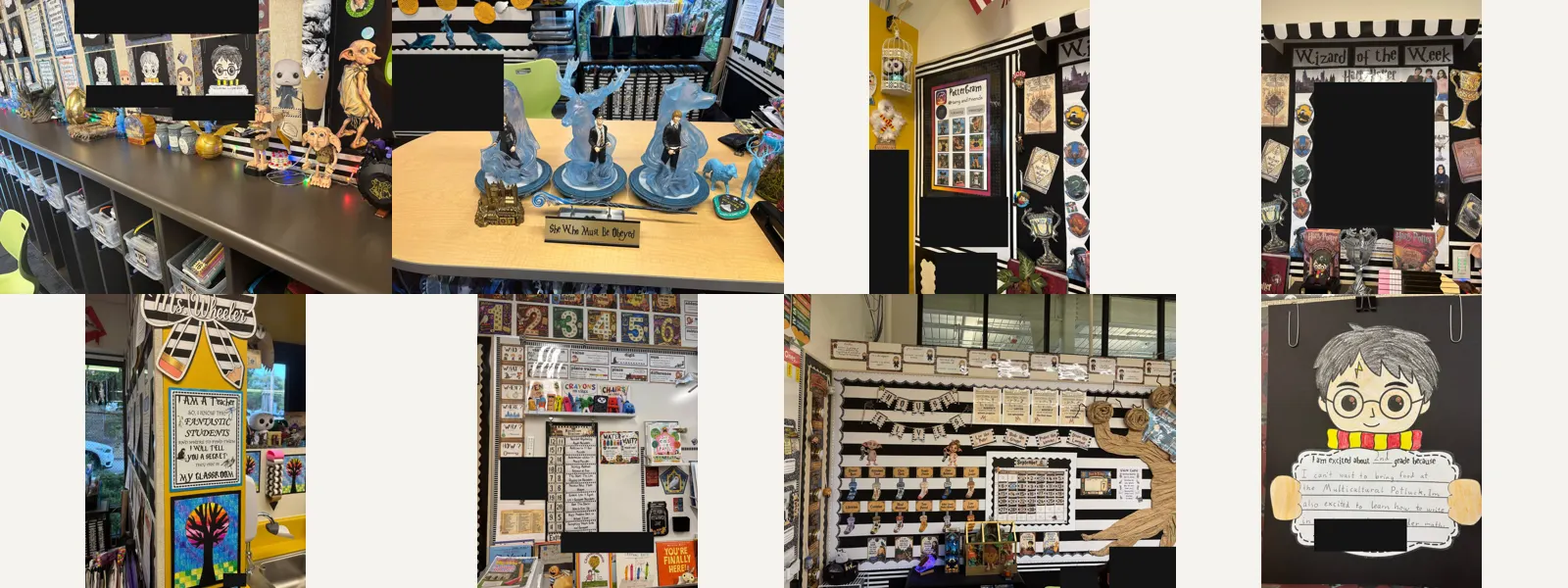
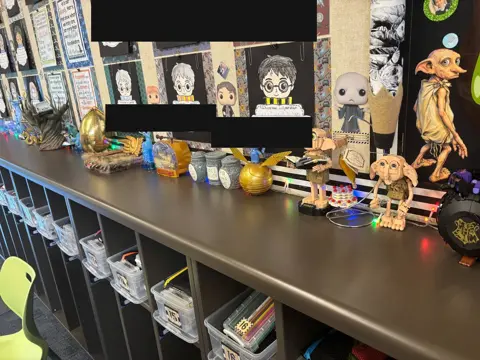
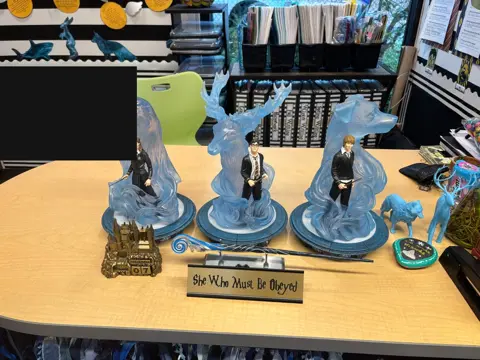
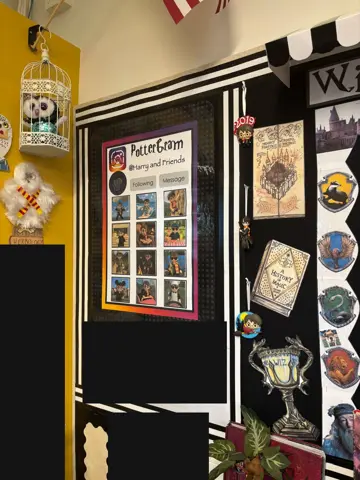
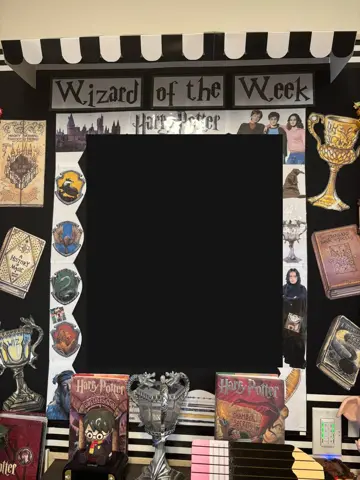
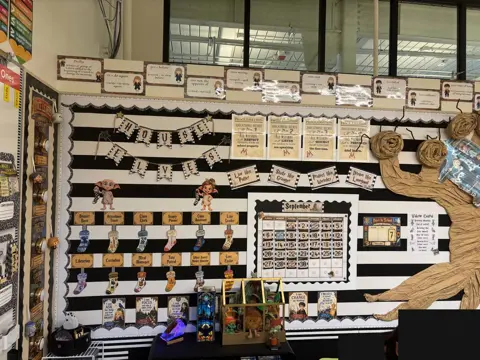
The room is fully Harry Potter-themed: a "PotterGram" photo board, a Wizard of the Week corner, house-elf job charts ("House Elves" — banner boss, attendance taker, librarian, line leader…), Educational Decrees as class rules, a Whomping Willow with a flying Ford Anglia, Patronus figurines on the teacher's table, and Dobby watching over the cubbies. Individual photos are in the appendix — student names, class photos, and safety documents are blacked out on the public copies.
The Basics
- Teacher: Mrs. Wheeler — 35 years of teaching
- Room: B05
- School day: 8:15 AM – 3:00 PM. Kids should be ready to start at 8:15; there's always something to do on arrival
- Contact: she's available early morning or after school; the school office number is on the handout. Teacher email and the Scholastic class code are on the original fliers and intentionally not reposted here
- Blackbaud is the one-stop shop: school calendar, newsletters, classroom bulletin boards (presentation slides get posted there too)
Key Dates at a Glance
| When | What |
|---|---|
| Monthly from October | Book report due (~15th of each month) |
| Oct (TBC) | Pumpkin project — plan to use a plastic/fake pumpkin, not a real one |
| Nov 10, 2026 | Multicultural Family Potluck, Belmont Library — bring a family dish |
| Nov (TBC) | Turkey in Disguise project |
| Dec 14, 2026 | Holiday Show |
| Dec (TBC) | Grinch Day — book & movie celebration |
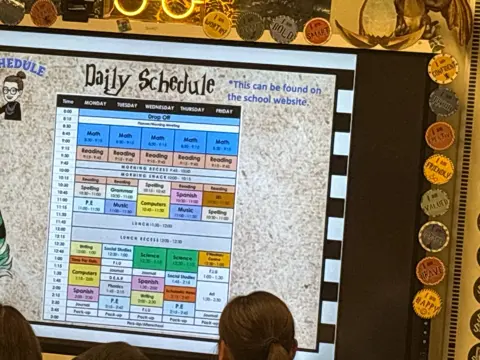
| January 2027 | Flat Stanley Project (3–4 weeks) |
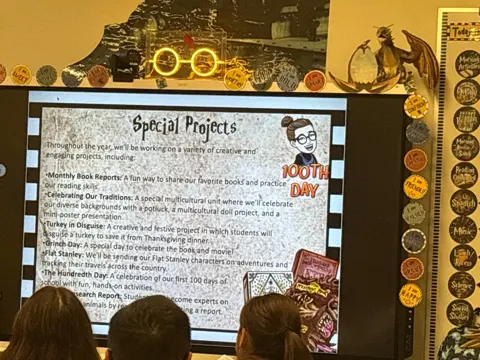
| February 2027 | 100 Day Project (build a model from 100 identical objects) |
| March 18, 2027 | Spring Sing rehearsal |
| March 20, 2027 | Spring Sing event |
| April–May 2027 | Animal Research Reports (written + presented in class) |
Project notes
- Wizard of the Week: picked by lottery. The chosen wizard gets fun home activities for the week and a poster to fill out — the job is bringing all the stuff back on time. Turn order is pure luck of the draw; when it's your wizard's week, keep an eye on the Take Home Folder so the materials don't get lost
- Pumpkin project: details still coming — the plan is to use a plastic or fake pumpkin rather than a real one (less mess, keeps better), and to confirm whether it's mandatory before going all-in
- Celebrating Our Traditions is the multicultural unit behind the Nov 10 potluck — it also includes a multicultural doll project and a mini-poster presentation
- Turkey in Disguise: students disguise a turkey to save it from Thanksgiving dinner
- Grinch Day: a themed celebration of the book and movie
Homework
- Assigned Monday–Thursday, about 10–15 minutes of written work, plus math-facts practice during the week
- Due the next morning or it's marked late; mistakes get corrected at home or the sheet comes home again the next night
- Pace check — don't push too hard. An occasional rough night is fine: if homework just isn't happening, send Mrs. Wheeler a short email explaining rather than forcing it through tears. The priority is keeping school feeling good, not a perfect streak
- Student Planner: kids write the week's assignments each Monday (starred once verified); parents initial nightly after checking
- Homework room is available at school, but a parent/guardian should still check the work each night
Absence & Tardiness
- Missed work waits in the Take Home Folder; same-day pickup is possible if you call the office first
- Pre-vacation work can be pulled a maximum of one week ahead — request dates in advance
Grading & Testing
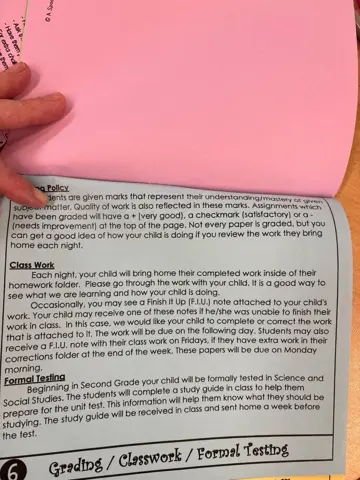
- Marks are simple: + (very good), ✓ (satisfactory), – (needs improvement)
- F.I.U. ("Finish It Up") notes mean unfinished classwork comes home — due the next day (Friday notes are due Monday)
- This is the first year of formal unit tests — Science and Social Studies. A study guide is completed in class and sent home one week before each test — so a study guide arriving = test in seven days. The study sheets are the curriculum for the test: study them and good grades follow — treat every study guide that comes home as the week's homework.
- Review the nightly folder; it's the best window into how things are going
Book Reports & Book Orders
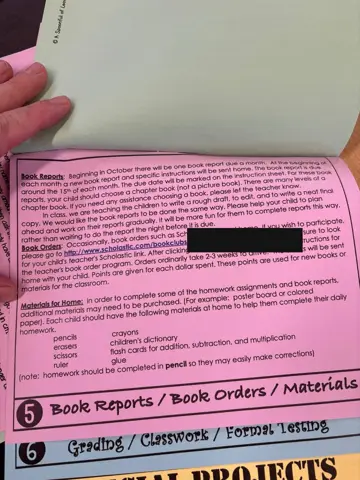
- One per month from October, due around the 15th; chapter books only (not picture books)
- Process mirrors class work: rough draft → edit → neat final copy. Pace it out rather than cramming the night before
- Scholastic orders occasionally come home; delivery takes 2–3 weeks and points earned fund classroom books
Home Supplies List
Pencils · erasers · scissors · ruler · crayons · children's dictionary · flash cards (addition, subtraction, multiplication) · glue. Homework is done in pencil so corrections are easy.
Curriculum
- Core: reading & language arts, writing, math, science, social studies
- Co-curricular: Spanish, computers, music, art, PE
Near-Term To-Do
- Monday, Sept 14 — "All About My Child" sheet due. It went home in students' Take Home Folders — fill it out and return by Monday
The Weekly Schedule
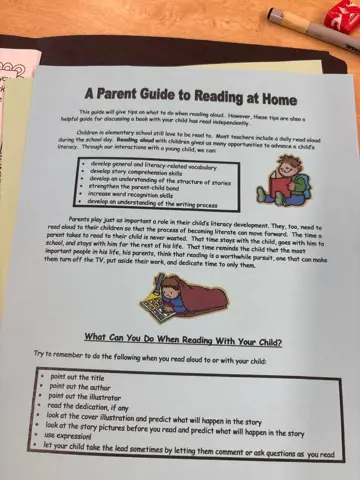
School day runs 8:00 drop-off to 3:00 pick-up (also on the school website):
- Every day: Math 8:30–9:15 → Reading 9:15–9:45 → morning recess + snack → lunch 11:30–12:00 + recess
- Monday: Spelling → P.E. (11:00) — afternoon: Writing, Time For Kids, Computers, Spanish
- Tuesday: Grammar → Music (11:00) — afternoon: Social Studies, D.E.A.R., Phonics, P.E. (2:15)
- Wednesday: Spelling → Computers (10:45) — afternoon: Science, Spanish, Writing, F.I.U.
- Thursday: Reading → Spanish (10:30) → Music (11:00) — afternoon: Science, Social Studies, Scholastic News, P.E.
- Friday: SEL → Spelling (11:00) — afternoon: Cursive, F.I.U., Art (1:30–2:30)
(F.I.U. = Finish It Up work time; D.E.A.R. = Drop Everything And Read; SEL = social-emotional learning.)
Classroom Philosophy
Respect and responsibility: respect each other, teachers, the classroom, and the environment; own your actions (spill it, clean it up; hurt someone, take them to the office for ice and check on them). Daily problem-solving coaching rather than pure discipline. Behavior is managed with a clip up / clip down chart, same system as last year. The school's stated mission pairs an accelerated curriculum with a warm, challenging, safe environment.
Practicing Math at Home
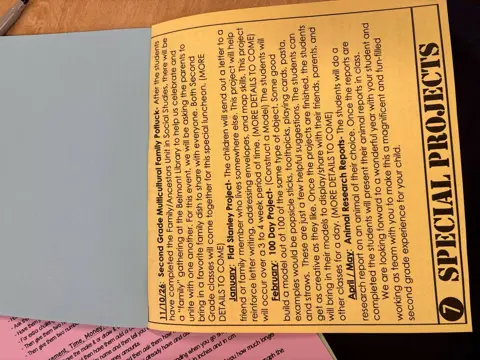
- Counting: 30–50 objects, then 50–100; backwards; skip-count by 2s/3s/5s/10s (stretch: 4s/6s/7s/9s); mental addition like 7+6, 10+13, 24+9
- Place value: build numbers with base-ten pieces, name hundreds/tens/ones, push past 1,000, then two-digit add/subtract (72+19, 82−15)
- Measurement, time, money, graphing: read clocks and add elapsed time; identify coins and count change (including tracking spending while shopping); measure household items in inches/cm/feet/meters; compare lengths; run a family survey and graph the results
Reading & Writing at Home
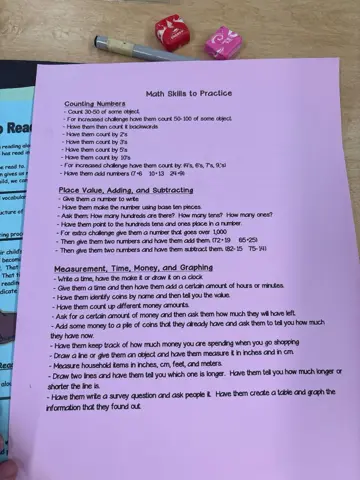
- Keep reading aloud — it builds vocabulary, comprehension, story structure, and word recognition
- Read-aloud tips: point out the title, author, and illustrator; read the dedication; predict from the cover and pictures; use expression; let the child interrupt with comments and questions
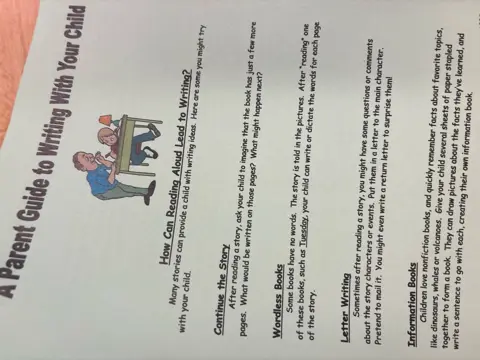
- Writing ideas that grow from reading: imagine a few extra pages after the story ends; "write" the words for a wordless picture book; letter-write to a story character (and sneak a return letter); staple paper into a little nonfiction book about a favorite topic
Summary compiled from the Back-to-School Night handout packet. Teacher email, office phone, and the Scholastic class code are on the original fliers.
Appendix: Original Fliers
Photos of the full handout packet, kept here so the paper copies aren't needed. Sensitive bits (teacher email, office phone, Scholastic class code, student name strip) are blacked out — they're on the physical fliers.
1. Contact Information (email/phone redacted)
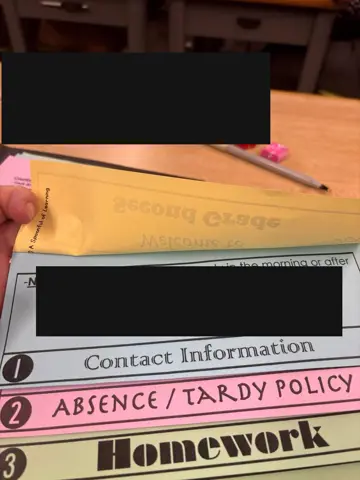
2. Absence / Tardy Policy
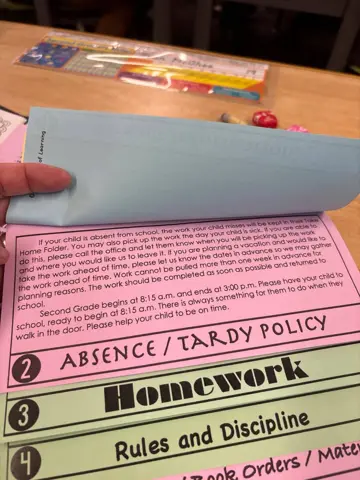
3. Homework
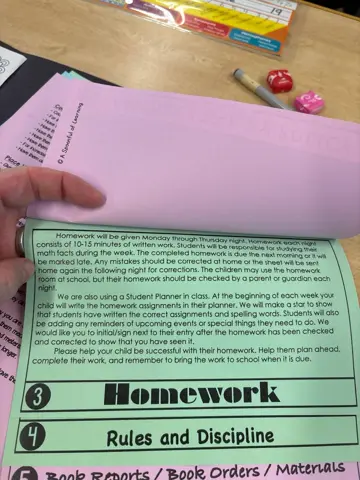
4. Rules and Discipline
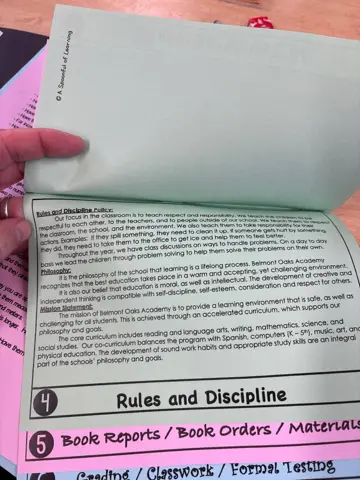
5. Book Reports / Book Orders / Materials (class code redacted)
6. Grading / Classwork / Formal Testing
7. Special Projects
8. Math Skills to Practice at Home
9. A Parent Guide to Reading at Home
12. Daily Schedule (presentation slide)
Appendix: Classroom Photos
13. Supply counter & cubbies — Dobby guards the collectibles; student writing display above (names redacted)
14. Teacher's table — Patronus figurines and the "She Who Must Be Obeyed" plaque
15. "PotterGram" corner — owl birdcage, Instagram-parody board (class photos & safety docs redacted)
16. Wizard of the Week board — sample poster redacted; turns rotate by lottery
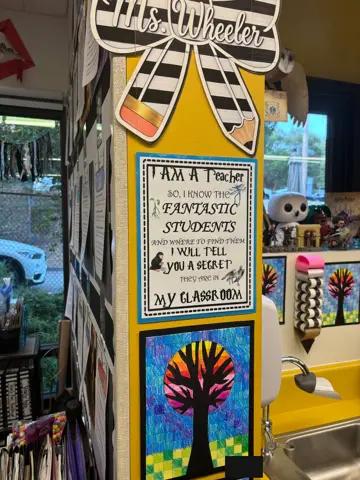
17. Front pillar & student art — "I am a teacher so I know the fantastic students and where to find them"
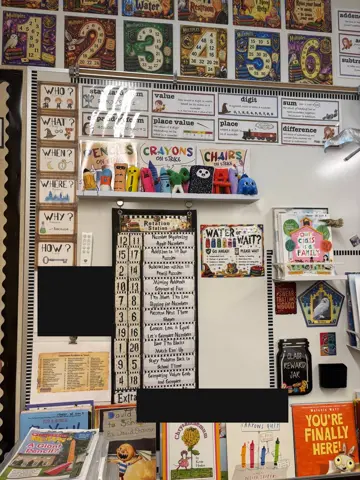
18. Math wall & rotation station — place-value posters, math centers, pencils/crayons/chairs on strike
19. House Elves job board — classroom jobs on socks, Educational Decree rules, volume chart
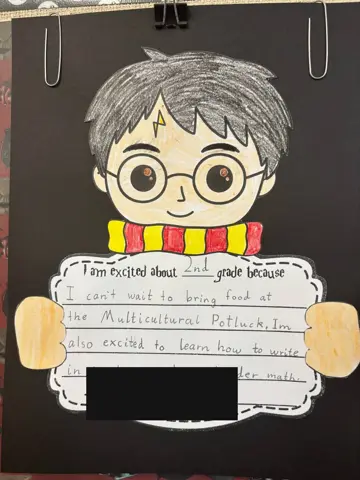
20. "I am excited about 2nd grade because…" — one student's own writing (name redacted)
11. Special Projects (presentation slide)
10. A Parent Guide to Writing With Your Child